- Solutions
- Platform
- Pricing
- Partners
- ResourcesThe State of Data-Driven Culture for Better Business DecisionsGET THE INFOGRAPHIC
- Company
- Try Now
- BOOK YOUR DEMO
Trusted Metadata for Estonia's Healthcare
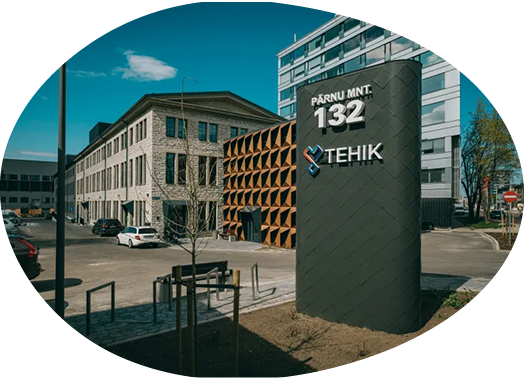
The Health and Welfare Information Systems Centre (TEHIK) is Estonia's national ICT competence centre for health, social security and labour. Operating under the Ministry of Social Affairs, TEHIK develops and maintains information systems, databases, e-services and the infrastructure behind them, while supporting secure data exchange, data quality and the use of data for policymaking.
Behind these services lies an exceptionally complex data environment. Estonia's central health information environment contains more than two billion documents, with data moving between healthcare providers, central information systems, data warehouses, analytics environments and other services.
As regulatory requirements and expectations around health data interoperability continue to evolve, TEHIK recognized the need for a more systematic way to understand, describe and connect its data. Since 2025, TEHIK has been using Accurity Business Glossary, Business Data Model and Data Catalog to build a common metadata foundation spanning business definitions, health data standards and technical data elements. The initiative is helping TEHIK increase transparency and traceability while preparing for requirements including the European Health Data Space (EHDS).
The initiative is led from the data architecture perspective by Scharlett Hansson, Data Architect at TEHIK, whose responsibilities include establishing data architecture principles, advancing metadata management and supporting compliance with national and European requirements, including EHDS.
Challenge
Managing health data at national scale means dealing not only with enormous volumes of information, but also with multiple systems, standards, organizational responsibilities and different perspectives on what the data represents.
TEHIK has a long history of health data standardization, with its data management team standardizing data-exchange templates since 2005. Over time, however, different teams and domains developed their own approaches to documenting and managing metadata.
Metadata related to health data exchange existed within XML documents, while analytics teams maintained descriptions in Excel and Confluence spacess was often documented according to the needs of individual projects and teams. Valuable metadata therefore existed, but there was no unified approach for bringing it together and managing it systematically.
his fragmentation meant that different parts of the organization could have different views and interpretations of the same data. Data standards used for data exchange, for example, do not necessarily correspond directly to structures in the data warehouse, and data can undergo further transformations during loading, processing and analytics. Understanding where data comes from, what it means, how it has changed and where it is ultimately used can therefore become difficult.
The need for greater transparency was further accelerated by regulation. National requirements called for information systems and their data to be properly described and made transparent to users, while EHDS introduced new requirements around the cataloguing and data description for health data. GDPR, the Data Act and the Data Governance Act further strengthened the need to understand and trace the data TEHIK manages.
TEHIK therefore needed more than another place to store documentation. It needed a foundation capable of bringing fragmented metadata together and connecting business meaning, health data standards and technical data elements.
Project in numbers
Since actively adopting Accurity in June 2025, TEHIK has built a substantial metadata foundation:
business terms
entities
attributes
datasets
All of this supports a fraction of an environment containing more than two billion health documents.
Objectives
Together with Accurity, TEHIK set out to establish a more systematic and scalable approach to metadata management rather than simply migrating existing documentation into a new application.
One of the key objectives was to bridge the gap between business and technical perspectives. Clinical specialists need to understand health information through its meaning and context, while technical specialists work with detailed data structures, standards and transformations. Accurity provides an environment where these perspectives can progressively be described and connected.
This ability to support both perspectives was also an important consideration when TEHIK evaluated the market:
“Accurity seemed to be handling the best of both worlds—the business side and the technical side.”
Another objective was to work with different health-data standards within a common metadata environment. TEHIK has long worked with HL7 CDA (HL7 Clinical Document Architecture), which defines the structure and meaning of clinical documents, and is increasingly adopting HL7 FHIR (HL7 Fast Healthcare Interoperability Resources), which represents healthcare information as reusable resources that can be exchanged between systems.
TEHIK has the need to adopt the national data description standard, which bases itself on DCAT-AP (Data Catalogue Application Profile) and European Health Data Space data description standard healthDCAT-AP, the European standards for describing data sets in interoperable data catalogues across EU member states. Accurity gives TEHIK a metadata foundation for bringing these different perspectives together—from business terminology and healthcare data models to technical data and unified data descriptions.
Regulatory readiness is currently TEHIK's highest-priority objective, with EHDS providing a particularly important driver. Rather than approaching this as an isolated compliance exercise, TEHIK is building a metadata foundation that can support evolving requirements over time. Data lineage and traceability are another important objective, with the longer-term ambition of understanding how data travels from collection through transformation to its eventual use.
Solution
TEHIK uses three interconnected Accurity capabilities—Business Glossary, Business Data Model, and Data Catalog—to build this foundation. In addition, it brought on board two agencies under the Ministry of Social Affairs (the Health Board and the State Agency of Medicines), collaborating closely to make this initiative a success.
Within the Business Glossary, TEHIK, with partners, has implemented an information-model layer intended to help clinical and technical specialists develop a common understanding of health data. In approximately one year of active use, around 1,300 business terms have been brought together.
The Accurity Business Data Model enables TEHIK to represent its health data exchange templates and HL7 FHIR profiles in a structured environment. It currently contains more than 600 entities and 3,000 attributes, including HL7 CDA entities, attributes and their definitions as well as HL7 FHIR entities based on FHIR profiles used in TEHIK's services. This provides a foundation for progressively understanding and harmonizing different representations of health data.
The Accurity Data Catalog adds the technical-data perspective, currently containing 41 datasets and 648 data structures. TEHIK has started establishing mappings between Data Catalog content and the Business Data Model, with the ambition to gradually extend visibility deeper into its data warehouse and analytics landscape.
Together, these capabilities allow TEHIK to move from isolated metadata documentation toward connected metadata management across business meaning, business data models and technical data assets.
Accurity's role goes beyond the technology itself. Introducing metadata management at this scale also requires deciding what should be described, how different perspectives should be connected and how metadata management should work across the organization. Accurity has supported TEHIK through mentoring, consultation and user training throughout this process.
Scharlett particularly highlights the cooperation around the Business Data Model:
“The mentoring was really helpful, especially the discussions of the Business Data Model and how to implement it more systematically.”
Accurity also trained TEHIK users, reducing the burden on the internal team, while the flexibility of the cooperation has helped the project evolve as TEHIK's requirements have become clearer.
“You have been a really great partner in that journey.”
Benefits
The initiative is still evolving, but it has already changed the way TEHIK approaches metadata. Bringing previously fragmented information together is giving the organization greater visibility into its data assets and how they relate to one another. This has already revealed cases where different data assets use the same underlying data, exposing duplication that can now be investigated and addressed.
The project has also initiated broader discussions about how data should be described and managed. TEHIK's architects are considering common principles for describing data in databases and how metadata could increasingly be captured during development rather than documented retrospectively. Metadata management is therefore becoming part of a wider conversation about data architecture, development process and data governance.
Accurity is also providing TEHIK with a concrete foundation for preparing for EHDS. TEHIK does not yet describe itself as EHDS-compliant—the implementation is a longer journey—but it now has a structured environment in which health datasets, business meaning, data models, standards and technical metadata can progressively be described and connected.
Perhaps the most important long-term benefit is the foundation being created for data traceability. By progressively connecting business terminology, health data models and technical data elements, TEHIK is moving toward a future in which it can better understand where health data originates, how it is transformed and where it is ultimately used.
What's next
TEHIK's next priority is to make its metadata-management approach increasingly systematic. The organization plans to extend data descriptions layer by layer through its warehouse environment, strengthen mappings between technical structures and business metadata, and develop deeper data lineage and traceability.
Greater involvement of business stakeholders and clearer metadata ownership will be another important part of the next phase, enabling relationships between business terminology and technical data assets to be established more systematically.
HL7 FHIR will also continue to play an important role. TEHIK wants FHIR profiles and resources to be described earlier in the service-development lifecycle, making metadata an integral part of developing new services rather than something documented afterwards.
With EHDS data catalogue and data-description requirements approaching, TEHIK can now build on the metadata foundation established with Accurity and focus on systematically expanding and connecting it across Estonia's health data landscape.
The mentoring was really helpful, especially in helping us approach the Business Data Model more systematically. Accurity has been a great partner throughout our metadata management journey.
Scharlett Hansson
Data Architect

Want to see Accurity for yourself?
Get a free personalized 1-on-1 demo.


